
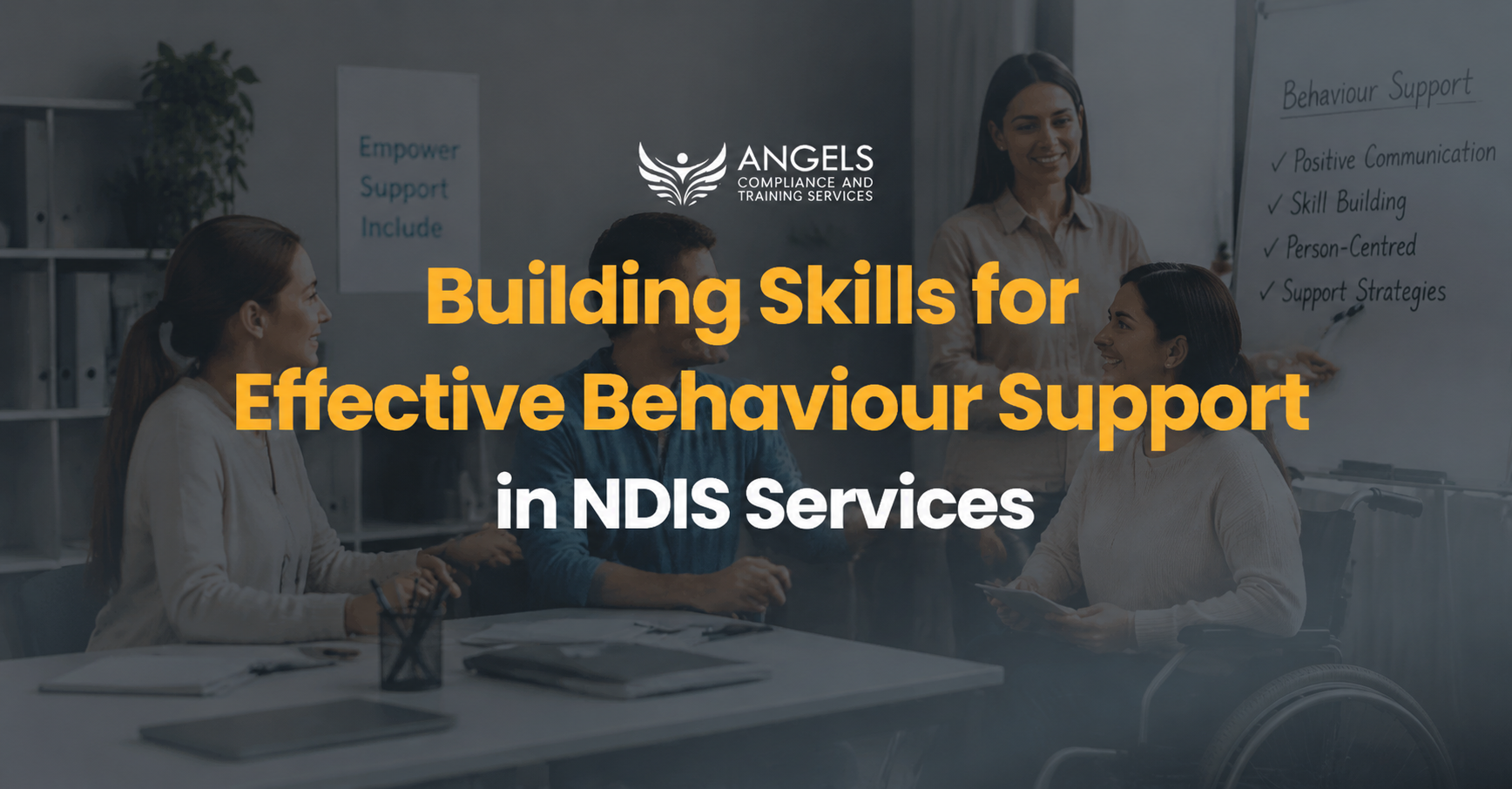
Supporting individuals with complex behaviours requires knowledge, empathy, and a strong understanding of person-centred care approaches. Within the NDIS sector, behaviour support plays an important role in helping participants achieve their goals, improve their quality of life, and engage more confidently in their communities.
Support workers, providers, and professionals involved in disability services must understand how behaviours communicate unmet needs, emotions, preferences, or challenges. Effective behaviour support focuses on understanding the reasons behind behaviours rather than simply responding to them. This approach helps create safer environments while respecting participant dignity, choice, and independence.
For organisations delivering NDIS supports, ensuring staff have the right knowledge and skills is essential. Proper education helps teams implement appropriate strategies, follow regulatory expectations, and provide consistent support that aligns with participant needs.
Ongoing professional development allows providers to strengthen their workforce, improve service quality, and create positive outcomes for participants. With the right training and guidance, teams can confidently support individuals while maintaining compliance with NDIS requirements.
Understanding the Importance of Behaviour Support in NDIS Services
Behaviour support is centred around understanding each participant as an individual. Every person has unique experiences, communication styles, preferences, and support requirements. A behaviour that appears challenging may often be a form of communication indicating discomfort, frustration, anxiety, or an unmet need.
A quality behaviour support approach focuses on identifying triggers, understanding patterns, and developing strategies that encourage positive outcomes. This may involve improving communication methods, adapting environments, building daily living skills, and supporting emotional regulation.
For NDIS providers, implementing effective behaviour support strategies is not only about meeting compliance expectations but also about improving participant wellbeing. When support workers understand how to respond appropriately, participants are more likely to feel respected, understood, and empowered.
Strong behaviour support practices also reduce risks, improve relationships between participants and support teams, and create more inclusive environments where individuals can participate actively in daily activities and community life.
Key Components of Effective Behaviour Support Practices
A successful behaviour support framework should include the following elements:
- Person-Centred Planning
- Support strategies should be developed around the participant’s goals, preferences, strengths, and individual circumstances.
- Understanding Behaviour Triggers
Identifying environmental, emotional, or situational factors helps providers respond more effectively.
- Positive Support Strategies
Approaches should focus on skill development, encouragement, and improving quality of life rather than restrictive responses.
- Clear Communication Methods
Teams should understand how participants communicate their needs and how to provide appropriate responses.
- Consistent Support Approaches
All staff members should follow agreed strategies to provide predictable and reliable support.
- Ongoing Monitoring and Review
Behaviour support plans should be reviewed regularly to ensure they remain effective and aligned with participant needs.
These elements help providers create structured approaches that promote independence, safety, and meaningful participation.
The Role of Training in Behaviour Support
Training plays a significant role in developing confident and capable support teams. Staff who understand behaviour support principles are better equipped to recognise participant needs and respond appropriately in different situations.
Effective education helps employees understand the importance of positive approaches, respectful communication, and proactive strategies. It also ensures they are aware of their responsibilities when supporting participants with complex behaviours.
For organisations, investing in workforce development improves consistency across service delivery. When all team members receive appropriate education, participants experience more reliable support regardless of which staff member is assisting them.
Professional development also supports compliance by ensuring workers understand relevant NDIS requirements, documentation expectations, and safeguarding responsibilities.
How Angels Compliance and Training Supports NDIS Providers
Angels Compliance and Training provides specialised education and compliance support for organisations operating within the disability sector. Their services help providers strengthen workforce capability, improve operational systems, and meet the expectations of quality service delivery.
For teams seeking to improve their skills, behaviour support practitioner training provides valuable knowledge about understanding behaviours, implementing positive strategies, and supporting participants effectively. This type of training helps professionals develop the confidence required to work with individuals who may have complex support needs.
Angels Compliance and Training focuses on practical learning that can be applied directly within workplace environments. Their programs support staff in understanding participant rights, maintaining safe practices, and delivering supports that align with NDIS principles.
Through tailored training solutions, compliance guidance, and professional support, Angels Compliance and Training helps organisations build stronger teams. Their approach ensures staff are not only aware of requirements but also understand how to apply effective strategies in real situations.
By improving workforce knowledge and capability, providers can enhance participant outcomes while creating a culture focused on safety, respect, and continuous improvement.
Benefits of Professional Training
Investing in professional development and behaviour support training provides several advantages for NDIS providers and their teams:
- Improved Staff Confidence
- Workers develop the knowledge and skills needed to respond appropriately to different behavioural situations.
- Better Participant Outcomes
Effective strategies support independence, communication, and overall wellbeing.
- Enhanced Workplace Safety
Trained teams are better prepared to identify risks and respond proactively.
- Consistent Service Delivery
Shared knowledge ensures all workers follow appropriate support approaches.
- Stronger Compliance Practices
Training helps organisations meet expectations around quality, safeguarding, and participant support.
- Improved Professional Development
Staff gain valuable skills that support career growth within the disability sector.
A knowledgeable workforce creates better experiences for participants while strengthening the organisation’s overall service quality.
Implementing Effective Behaviour Support Strategies
Successful behaviour support requires ongoing commitment from the entire organisation. It is not limited to individual support workers but involves managers, supervisors, families, and other professionals working together.
Providers should create environments where participants feel safe expressing themselves and where their needs are understood. This requires regular communication, accurate documentation, and collaboration between everyone involved in the participant’s support network.
Using evidence-based approaches helps organisations develop strategies that are practical and effective. Support plans should focus on prevention, skill development, and improving participation rather than simply reacting to incidents.
Regular reviews are also important because participant needs may change over time. Adjusting strategies based on progress and feedback ensures support remains meaningful and effective.
Understanding NDIS Behaviour Support Requirements
Providers delivering disability services must ensure their practices align with NDIS quality and safeguarding expectations. This includes respecting participant rights, promoting choice and control, and ensuring any behaviour support strategies are appropriate and ethical.
Understanding ndis behaviour support requirements helps organisations develop safer practices and ensure staff know their responsibilities. Providers must consider participant wellbeing, minimise risks, and ensure support approaches are focused on improving quality of life.
Strong governance systems, appropriate documentation, and ongoing staff education help organisations maintain high standards and demonstrate their commitment to participant safety.
Common Challenges in Behaviour Support Delivery
Providing effective behaviour support can involve challenges, especially when participants have complex needs or communication difficulties. Staff may sometimes struggle to identify triggers, understand behaviours, or implement consistent strategies without appropriate guidance.
Another challenge is ensuring all team members follow the same approach. Inconsistent responses can create confusion for participants and reduce the effectiveness of support strategies.
Regular education, clear communication, and professional guidance help overcome these challenges. Organisations that prioritise learning and collaboration are better equipped to provide safe, respectful, and effective support.
Conclusion
Effective behaviour support is essential for helping NDIS participants achieve greater independence, confidence, and wellbeing. With the right knowledge, strategies, and workforce development, providers can create supportive environments that respect individual needs and promote positive outcomes.
Working with experienced organisations such as Angels Compliance and Training helps providers strengthen their workforce, improve service quality, and maintain strong compliance practices. Investing in professional development ensures support teams have the skills required to deliver safe, respectful, and participant-focused services.