
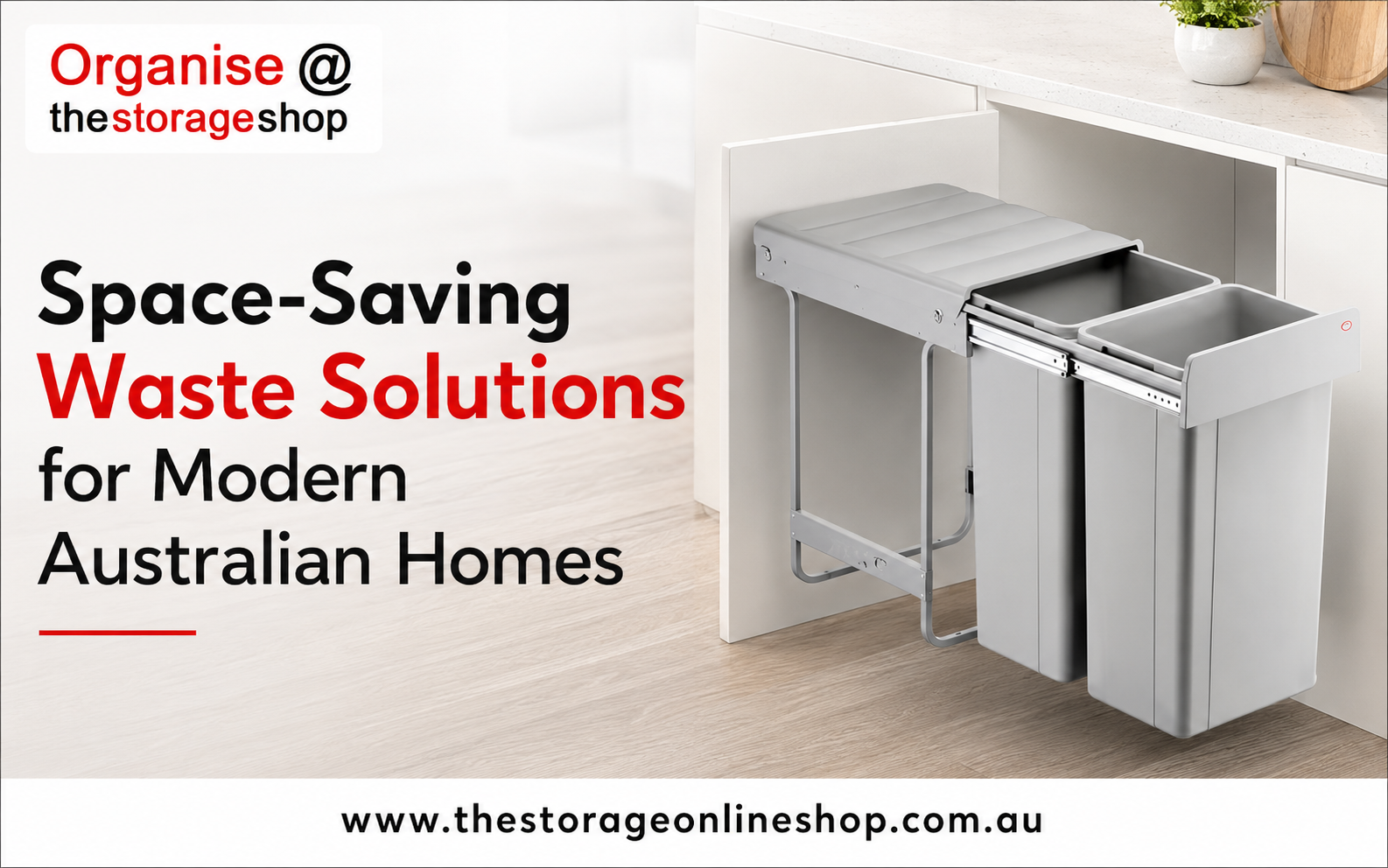
Modern homes often need to do more with less space. Apartments, townhouses, compact renovations and open-plan layouts can leave little room for a bulky freestanding rubbish container. Well-planned kitchen bins help use existing cabinet space more effectively while keeping floors clear and waste out of sight.
A space-saving system is not only useful in a small kitchen. It can also improve movement in a busy family home, create a cleaner visual line in an open-plan room and place rubbish closer to the preparation zone. The right design should fit the cabinet, support the household’s sorting habits and remain convenient to empty.
Why Floor Space Matters
A freestanding bin occupies more than its physical footprint. People need room to approach it, open the lid and walk around it. When it sits beside a pantry, refrigerator or doorway, it can interfere with other tasks. In a narrow galley kitchen, even a small obstruction may make the room feel crowded.
Moving waste storage into a base cabinet returns that floor area to the kitchen. It may improve access to cupboards, make cleaning easier and reduce the number of visible items. This is especially valuable when the kitchen connects directly to a dining or living area.
Common Problems in Compact Kitchens
Small kitchens frequently have:
- Narrow walkways and limited floor space.
- Too little room for separate waste containers.
- Underused base cabinets.
- Plumbing that restricts under-sink storage.
- Waste placed too far from the work zone.
A good solution should address several problems rather than move clutter elsewhere.
Use Cabinet Space Strategically
Before selecting a system, identify which cabinet offers the best balance of space and convenience. A cabinet beside the sink or preparation area is usually practical, but it must be large enough for the frame and opening movement. In a new kitchen, waste storage can be included in the cabinet plan. In an existing kitchen, accurate internal measurements are essential.
Do not assume that a nominal 450 mm or 600 mm cabinet provides that full internal width. Side panels, hinges and door construction reduce usable space. Measure the clear opening, internal depth and available height. Record any pipes, shelves or braces.
Under-Sink Space
The sink cabinet is a popular choice because it is close to food preparation and washing. However, plumbing may restrict both the position and height of the buckets. Compact containers or offset frames can sometimes use the clear area beside the pipes.
Keep cleaning products organised separately so they do not fall behind the bin or prevent it from extending. A narrow basket, door rack or nearby cupboard can hold detergents and cloths. The objective is to create a waste zone that remains accessible rather than packing every available item into one cabinet.
Select the Right Opening Style
Different systems use cabinet space in different ways. Some slide from the cabinet on a frame, while others attach to the door and move as it opens. A basic removable bucket may simply sit on the cabinet floor. The best option depends on frequency of use, available clearance and installation preferences.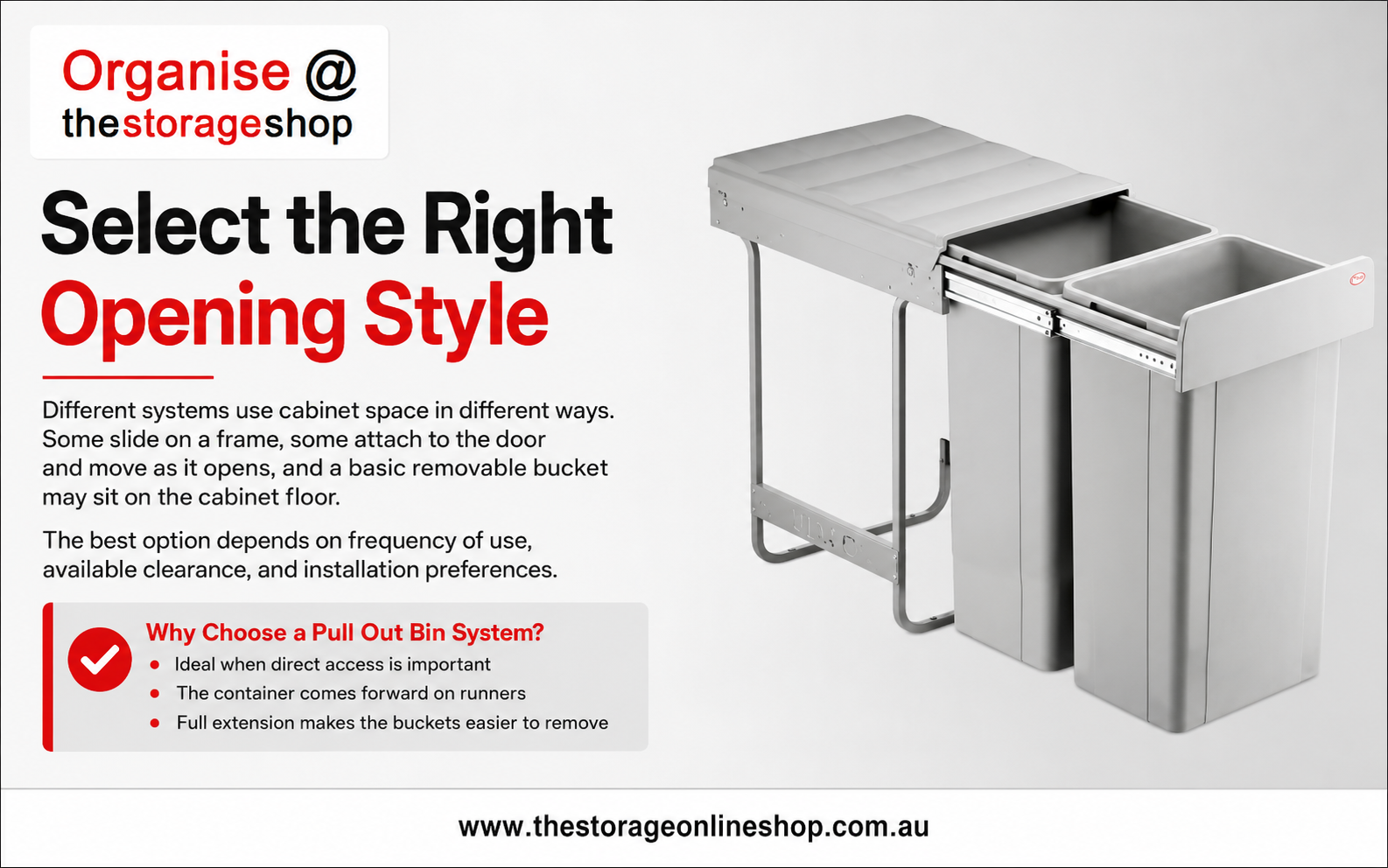
Kitchen pull out bins are useful when direct access is important. The container comes forward on runners, allowing the user to dispose of waste without reaching into the cupboard. Full extension also makes the buckets easier to remove.
Door-operated designs can provide quick access with a single movement. However, they require suitable door construction and careful alignment. Check the product instructions before drilling, particularly when working with narrow doors or lightweight cabinet panels.
Plan for Waste Separation
Space-saving does not have to mean abandoning recycling. Many kitchen pull out bins use two or more smaller buckets within one frame. This keeps general rubbish and recyclable material together while maintaining separate compartments.
The correct configuration depends on local habits and household volume. A pair of equal-sized buckets may work when rubbish and recycling quantities are similar. Unequal compartments can be more practical when one waste stream is much larger. A small third container may suit food scraps.
Make Every Compartment Useful
Before choosing a configuration, ask:
- How quickly does each waste stream fill?
- Will standard liners fit?
- Can bulky packaging pass through the opening?
- Are full buckets easy to carry and remove?
- Is a lid needed for food waste?
Every bucket should have a clear purpose, or valuable cabinet volume may be wasted.
Avoid Choosing Capacity by Guesswork
Review how often the household currently empties its rubbish and recycling. This gives a realistic starting point for capacity. A very large container may seem convenient, but it can be difficult to lift and may allow food waste to remain indoors longer. Smaller buckets require more frequent emptying but can be easier to handle.
A tall bucket may add capacity in a narrow cabinet but needs clearance for removal. Side-by-side containers support sorting but require more width. Let the cabinet shape guide the decision.
Prioritise Smooth, Reliable Movement
The runner system carries the combined weight of the frame, buckets and waste. It should remain stable when fully extended and move without twisting. Overloading or using a system that is not correctly fixed can shorten its working life.
Soft-close movement may reduce noise and prevent the frame from slamming into the cabinet. Full-extension runners improve access to rear compartments. These features can be valuable, but correct sizing and installation remain more important than optional extras.
Installation Considerations
Read the installation requirements before ordering. Confirm the mounting surface is level and structurally suitable. Check whether the frame attaches to the base, sides or cabinet door. Allow clearance for hinges and adjacent handles.
Maintain Hygiene in a Small Space
Compact kitchens can show clutter and odours quickly, so regular maintenance matters. Use fitted liners, empty food waste frequently and clean spills immediately. Removable buckets should be washed and dried before returning them to the frame.
Do not allow bags to overflow, as material can catch beneath the lid or fall behind the frame. Wipe runners with a damp cloth and keep spare liners nearby.
Why Choose The Storage Online Shop?
The Storage Online Shop carries a dedicated selection of pullout, door-mounted, door-operated and freestanding waste products, alongside a wider range of kitchen and home-organisation solutions. Customers can compare capacities and cabinet styles online, which is useful when selecting for a compact renovation or an existing cupboard. The website also states that delivery is available Australia wide, subject to its shipping information.
Turn an Overlooked Cabinet into Useful Storage
The best space-saving solution uses an area that already exists and places waste close to where it is created. It should open without blocking a walkway, provide enough capacity for everyday use and allow every bucket to be removed for cleaning.
A carefully selected pull out rubbish bin can transform an underused cabinet into a practical waste station while preserving valuable floor space. Measure the interior, consider the opening path and match the compartment layout to the household’s actual sorting routine.
Concealing waste, clearing the floor and organising recycling within one cabinet can make a modern kitchen feel larger, calmer and easier to use.